
CES has always been a concrete representation of themes – a global stage for innovation, connecting the world and creating the future. Here you witness how technology meets humanity to create extraordinary possibilities. “CES is where innovation comes to life” says Gary Shapiro, CEO and Vice Chair, of Consumer Technology Association (CTA)®, owner and producer of CES.
CES 2026 marked a clear inflection point for the global technology ecosystem. After years of concept-heavy showcases and speculative roadmaps, this year’s event reflected a renewed sense of optimism, pragmatism, and readiness for large-scale adoption. Innovation at CES 2026 was not just about showcasing what is possible it was about demonstrating what is deployable, scalable, and economically viable.
CES 2026 was held from January 6–9, 2026, drawing more than 148,000 attendees, 4,100 exhibitors, and 6,900 global media, content creators, and industry analysts exploring and recognizing the innovations that will drive the industries globally. Companies and startups also use the platform to launch products and set the conversation for tech innovation on what the industry and the consumers can expect from 2026 and beyond.
AI, Wireless Power, and Innovation Trends Based on CES 2026
Across AI, mobility, smart homes, wearables, and energy systems, the narrative converged around efficiency, sustainability, and user-centric design. For WAWT, CES 2026 strongly reinforced one central theme: wireless power is no longer a peripheral technology it is becoming foundational to future product ecosystems.
Key Trends and Innovations Unveiled at CES 2026: A High-Level View
CES 2026 was dominated by several themes that unveil where technology is headed in 2026:
1. AI is Everywhere: From Being A Separate Feature to a Proactive Agent
This year, artificial intelligence (AI) has developed from being marketed as a separate feature to being embedded everywhere. AI-driven capabilities infused everything from laptops and robots to home appliances and smart accessories at CES 2026, establishing AI as a foundational layer of modern technology moving forward.
- AI moved from cloud dependency to local processing in everyday tech. At CES 2026, many consumer products, from PCs and phones to wearables and vehicles, featured on-device AI powered by efficient chips and edge computing platforms. This shows that AI inference (understanding and acting on data) happens directly on the device rather than relying on cloud servers, leading to faster responses, reduced latency, lower power use, greater privacy, and smoother offline operation.
- Proactive or Agentic AI that are autonomous, decision-making AI systems are reshaping automotive workflows and customer experiences by enabling vehicles and related services to operate with minimal human intervention, optimizing operations from inspections to real-time decision support presenting the development of AI from reactive assistants triggered by prompts to proactive ones that take initiatives from organizing schedules across apps, anticipating user needs based on context (like location and behavior), and in some demos even coordinating actions across multiple devices.
- Generative AI features (e.g., note-taking, summarization, smart responses) are integrated and designed to work across devices as Lenovo and Motorola introduced Qira.
2. Physical AI Redefines Robotics
Physical AI emerged as one of the most defining themes at CES 2026, signaling a fundamental shift in how machines interact with the real world. Unlike traditional robots that rely on rigid, pre-programmed instructions, Physical AI systems combine advanced perception, large AI models, and real-time decision-making to understand their surroundings and adapt dynamically.
- Humanoid and mobile robots appeared at CES 2026, demonstrating capabilities ranging from industrial logistics to household support.
- Boston Dynamics showcased advances in their Atlas humanoid robot powered by Google DeepMind AI, highlighting future use in complex physical tasks.
- LG also demonstrated new capabilities in its CLOiD Home Robot, leveraging advanced AI to show how home service robots can support daily activities, from smart home control and monitoring to a more natural and conversational interaction within living spaces.
Hyundai’s MobED platform robot won a Best of Innovation award for its ability to traverse uneven terrain a huge step toward practical field robotics.
3. Next-Gen Displays and Immersive Tech
CES 2026 continued to showcase how screens and displays are evolving:
- Creaseless foldable screens Samsung unveiled a foldable display without the visible crease that has plagued earlier models, marking a potential turning point for consumer adoption with the new Galaxy Z TriFold.
- Flexible and rollable displays transitioned from concept toward real products, allowing screens to expand and contract for portability and immersion.
- High-end TV tech like Hisense’s RGB Mini LED and LG’s ultra-thin Wallpaper OLED reinforced how advanced picture quality, contrast, and brightness can transform home entertainment.
4. Health, Wearables, and Longevity Tech
Wearables at CES 2026 weren’t just about step counts anymore they increasingly function as health companions and wellness trackers reflecting the industry’s movement from reactive health tracking toward predictive and preventive wellbeing tools, powered by AI models that learn from long-term patterns.
- Smart rings and bands monitored not just activity but emotional state, stress, and comprehensive biometrics.
- Longevity tech like Withings’ Body Scan 2 offered biomarker health insights previously only available in clinical settings.
5. Smart Mobility and Autonomous Systems
Beyond consumer electronics, mobility innovations stretched from autonomous cars and robotaxis to smart infrastructure:
- OEMs such as BMW, Ford, and startups showcased on-vehicle AI assistants, advanced driver-assist tech, and integrated generative interfaces.
- Autonomous shuttles and scooters hinted at how urban travel will become more connected and adaptive.
6(A). Wireless Power: Trends and Notable Innovations
As devices become more mobile, interconnected, and always-on, wireless power emerged at CES 2026 as a critical enabler of frictionless technology experiences. No longer viewed as a novelty feature, wireless power innovations focused on reliability, scalability, and real-world usability, aligning with the show’s broader themes of untethered living, smart environments, and IoT expansion.
With this, wireless power also made headlines at CES 2026 as companies took charging beyond convenience toward practical, everyday integration:
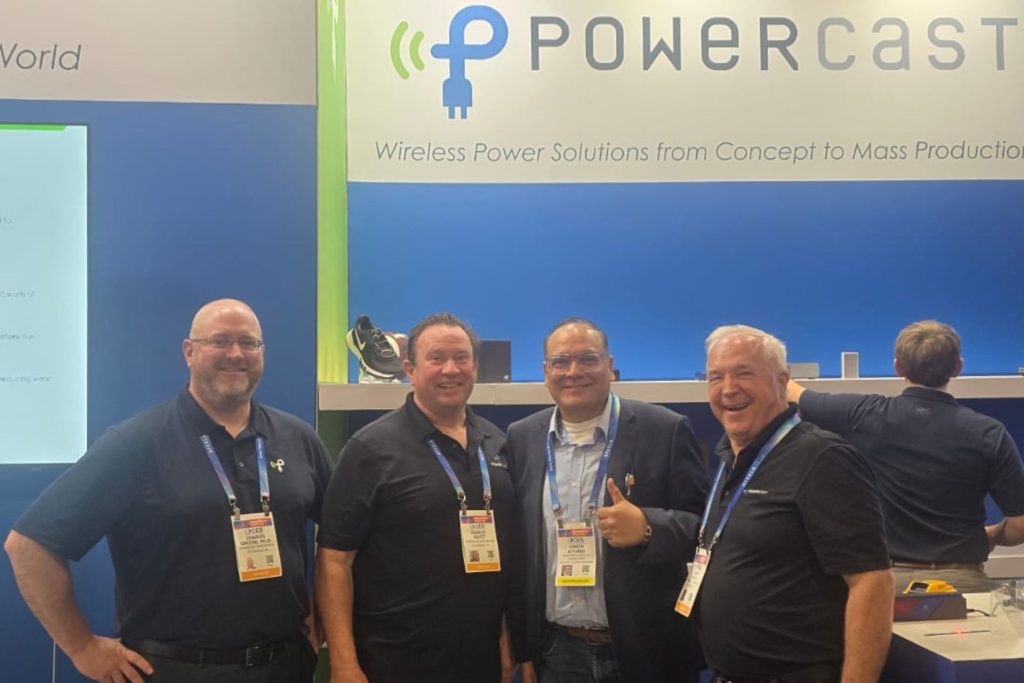
- Powercast highlighted long-range and multi-device wireless power delivery, demonstrating how devices could be energized without cords and supporting use cases such as battery-free sensors and distributed IoT networks with real-world demonstrations through a magnetic resonance-powered camera, a PCT300 battery-free RFID sensor tag and a fully wireless desktop powered by magnetic resonance.
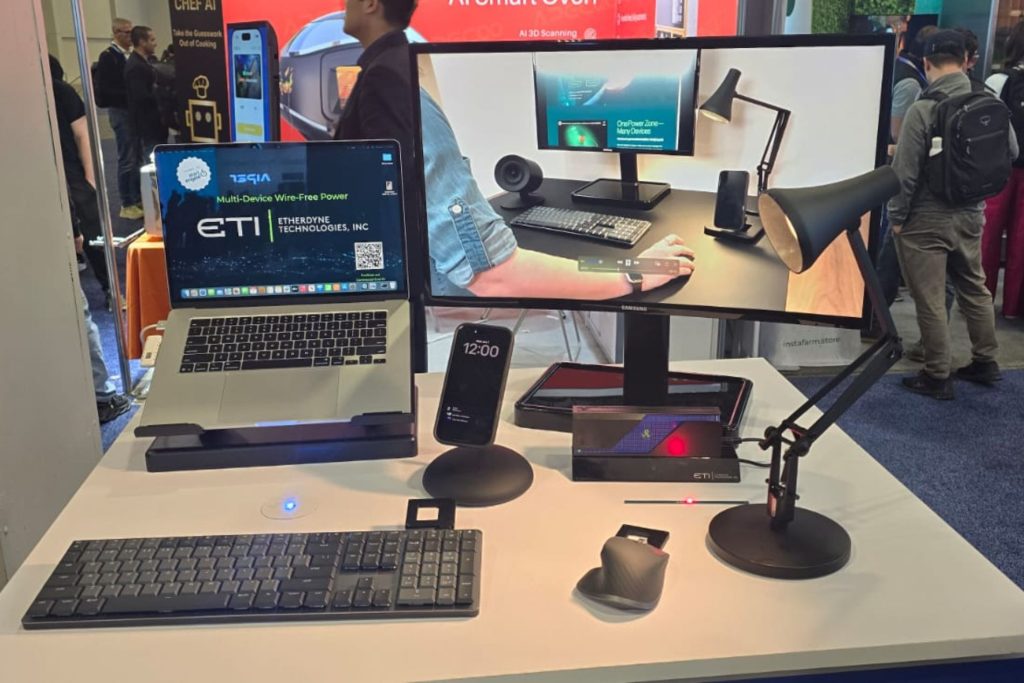
- Etherdyne Technologies demoed a Wireless Power Zone using magnetic resonance-based delivery to power laptops, phones, and accessories within a defined space pointing to a future of cable-free work and living environments.
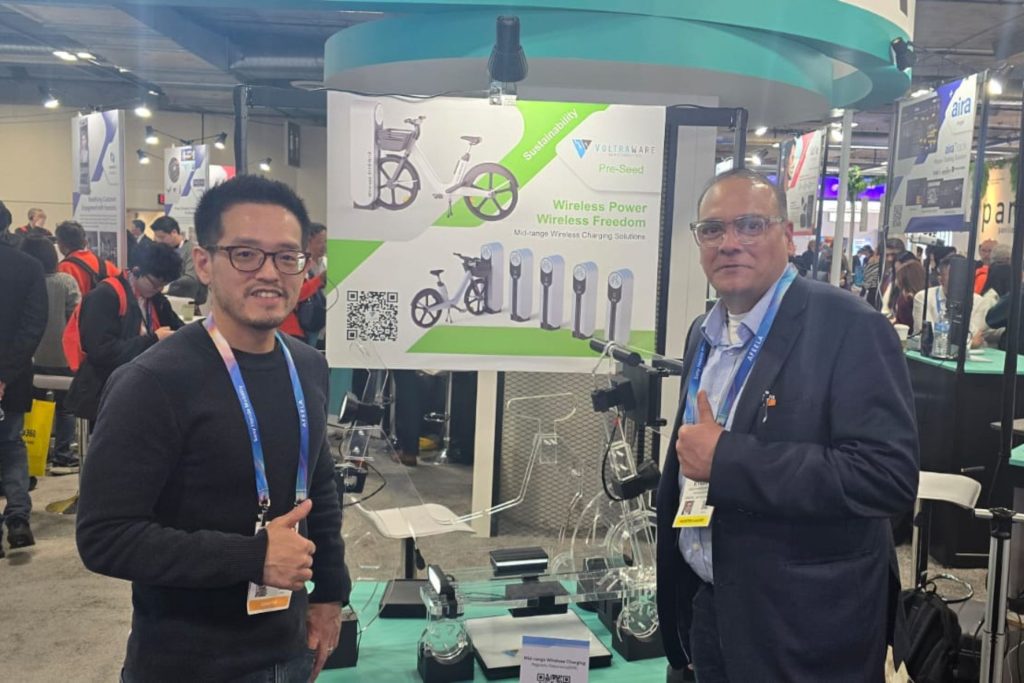
- Voltaware energy intelligence solutions complement wireless power by enabling energy monitoring, optimization, and efficiency tracking, critical for sustainable smart homes.
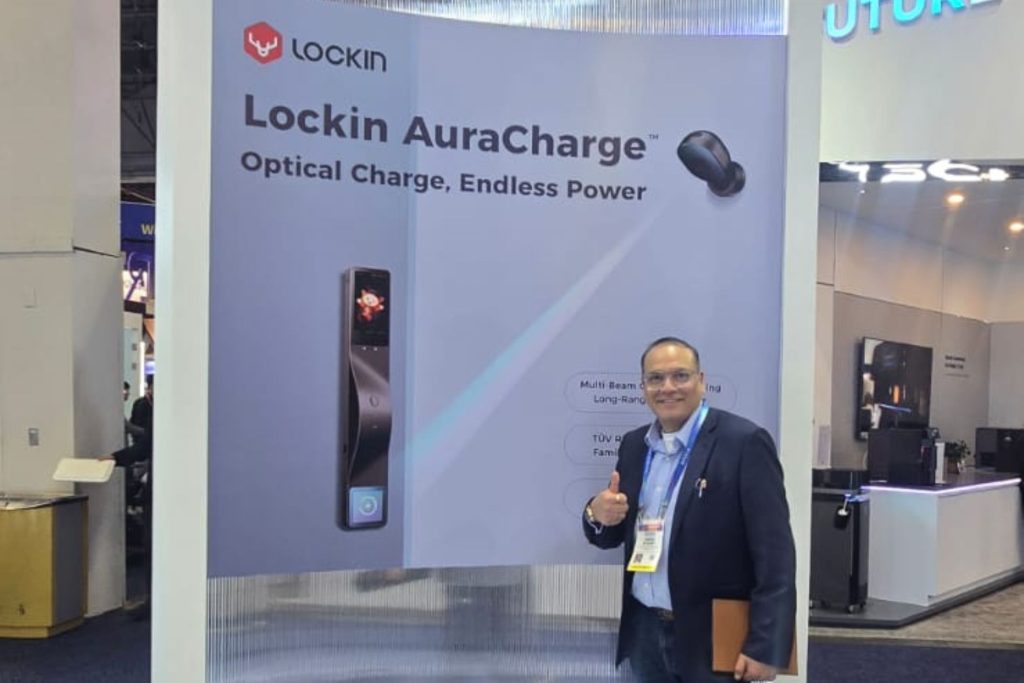
- Lockin demonstrated how wireless power integrates with smart access and security systems, reducing maintenance and improving user experience.
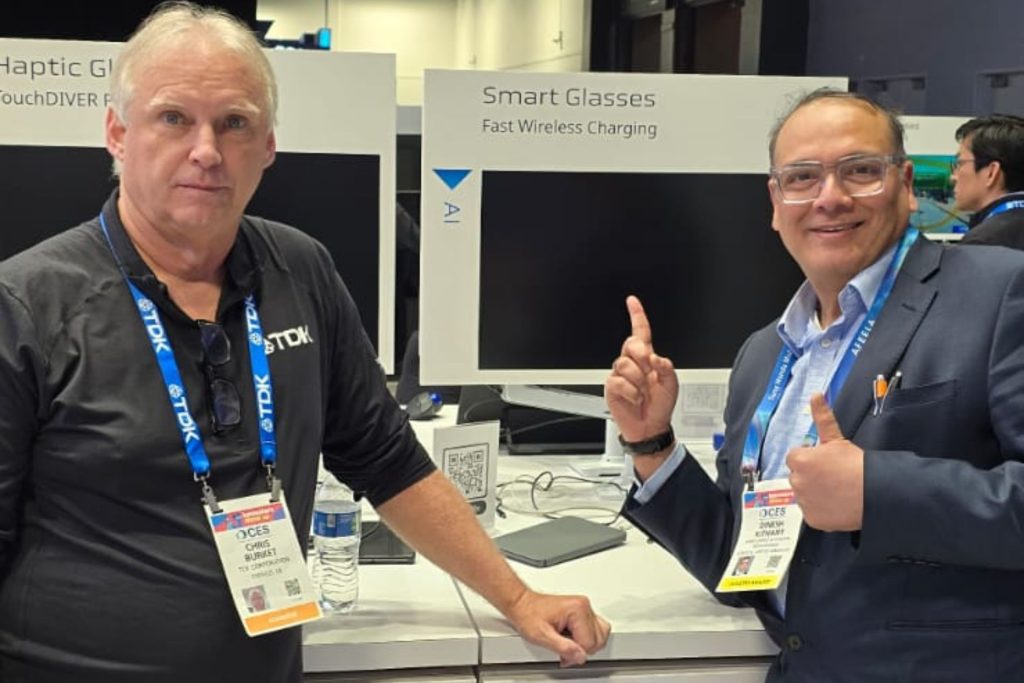
- TDK Electronics contributions in magnetic materials, power components, and passive devices underpin much of the wireless power ecosystem. Their role is increasingly strategic as systems move toward higher power and higher efficiency.
- NuCurrent remained a central player in advanced wireless charging design, particularly around magnetic alignment, multi-coil systems, and automotive wireless power solutions.
- Solace Power and GENTEX work in resonant wireless power systems highlighted applications in robotics, logistics, and harsh environments where connectors are undesirable.
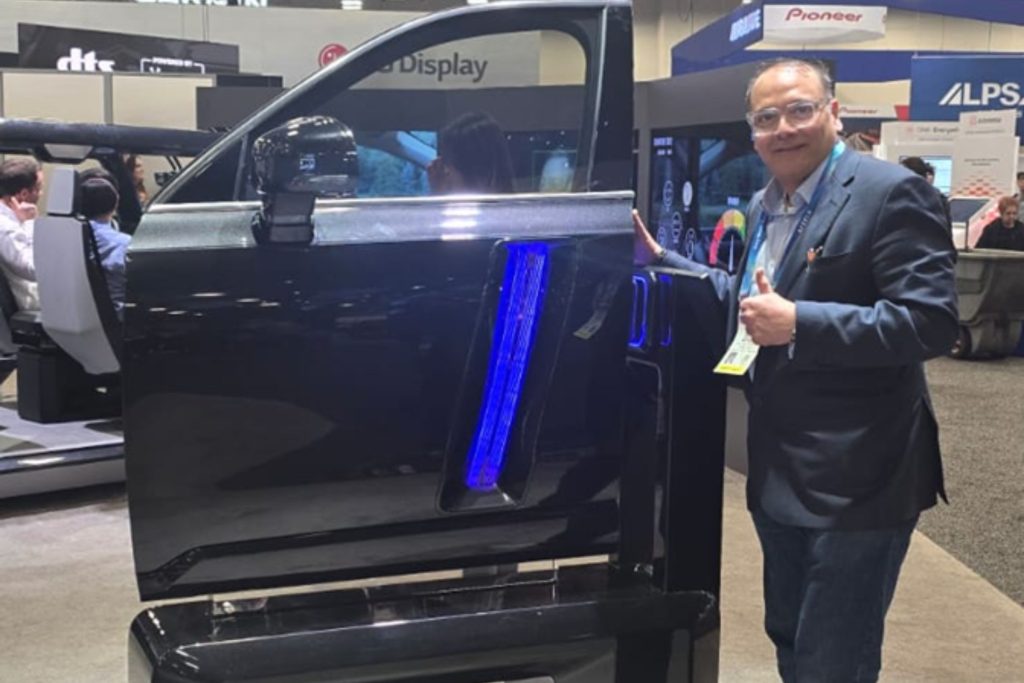
- Belkin Qi2-compatible consumer products demonstrated how wireless fast charging is becoming mainstream, with improved thermal control and modular designs.
Together, these developments suggest that wireless power is maturing from a convenience feature into foundational infrastructure, enabling cleaner desks, more flexible device placement, and new possibilities for powering connected environments without physical plugs.
6(B). The Wireless Power Consortium and the Rise of the Ki Standard
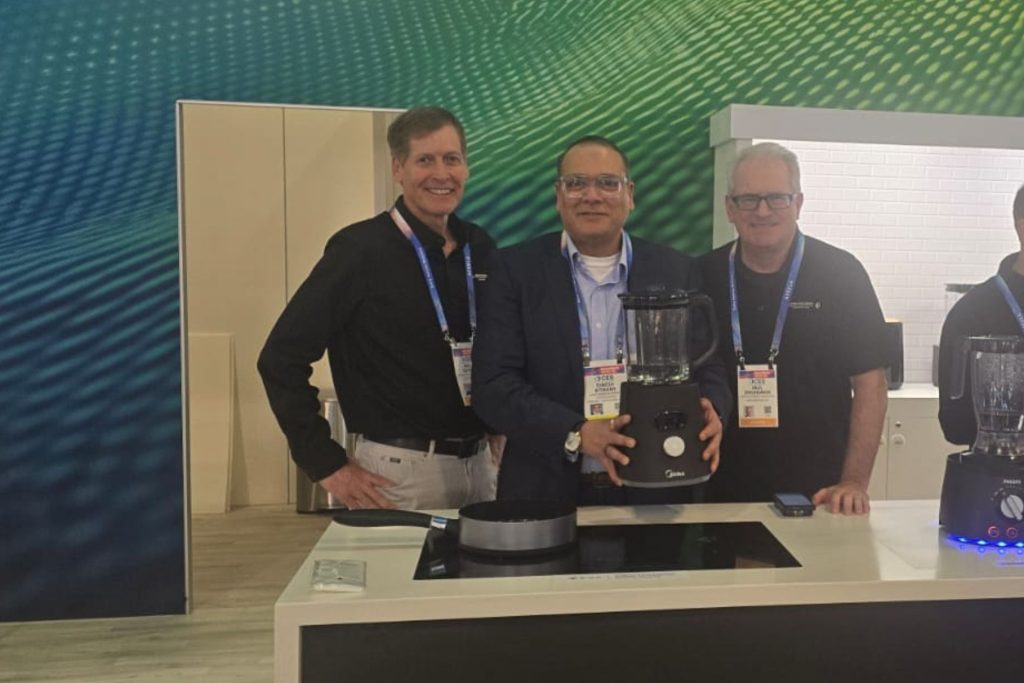
One of the most impactful developments showcased around CES 2026 was the continued push by the Wireless Power Consortium (WPC) to mainstream the Ki Cordless Kitchen standard.
6(C). Ki: Redefining High-Power Wireless Applications
Unlike Qi, which targets consumer electronics, WPC’s Ki wireless power solution addresses high-power cordless kitchen appliances, enabling wireless power delivery of up to 2,200W through induction. At CES 2026, WPC’s Ki transitioned from a concept to a credible infrastructure-level solution for modern kitchens.
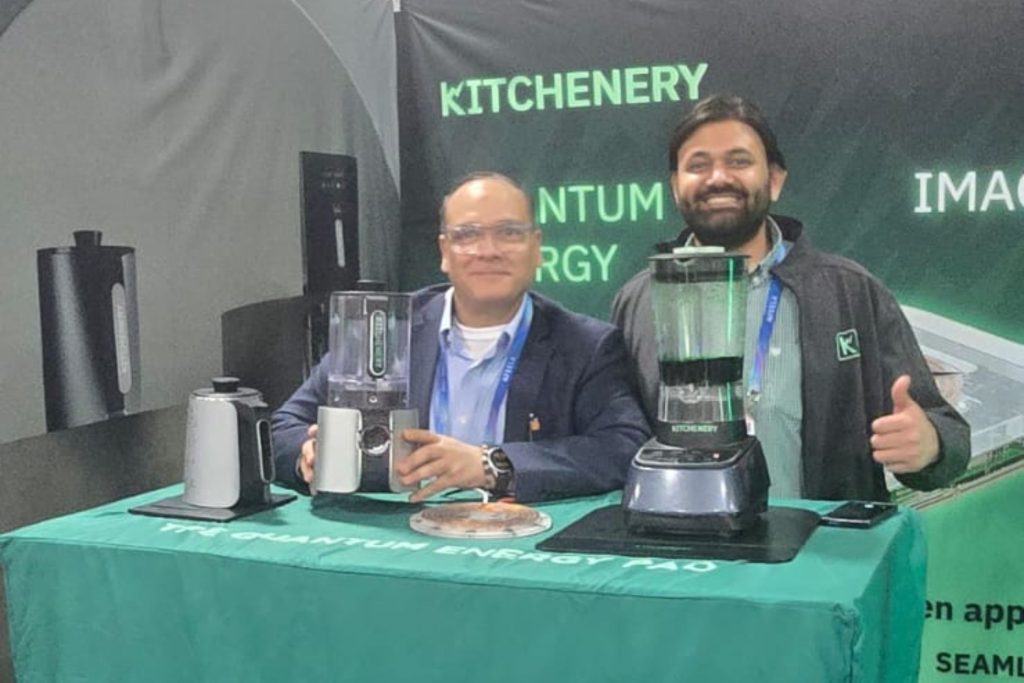
Kitchenery, an US-based technology company, with its proprietary wireless power technology specificically for small kitchen appliances, also separately demonstrated how wireless power can enhance both safety and aesthetics in everyday environments.
As per Kitchenery, cordless, wirelessly powered appliances aren’t just a convenience upgrade. They unlock safer counters, cleaner spaces, more flexible homes, and a fundamentally different relationship with how we cook and gather.
7. Power Supply and Charging Innovations
Alongside wireless breakthroughs, CES 2026 also underscored the importance of robust, efficient, and intelligent power delivery systems. As AI-enabled devices demand more energy while remaining compact and portable, innovations in power supply and charging focused on safety, adaptability, and high-performance output, reinforcing the importance of power as a core pillar of modern device design.
Power delivery and electrical infrastructure advances were also spotlighted:
- USB-C Power Delivery (PD) continued to scale, with higher wattages and smarter load balancing to support laptops, smartphones, and multi-device ecosystems through a single standardized connector.
- Smart chargers and hubs from brands like Anker integrate displays, airflow cooling, and real-time load monitoring, improving efficiency while reducing thermal and safety risks.
- EV charging solutions and solid-state battery previews reflected CES’s expanding scope, highlighting how electrification trends now span everything from consumer gadgets to vehicles and energy infrastructure.
Collectively, these innovations emphasize efficiency, adaptability, and user safety reinforcing power delivery as an essential foundation supporting the AI-driven, always-connected experiences showcased throughout CES 2026.
8. CES 2026 Caterpillar’s Key Notes
- AI moved from concept to execution with a strong focus on real-world, operational use cases.
- Caterpillar’s keynote signaled CES’s expansion beyond consumer tech into industrial and physical AI.
- The launch of Cat AI Assistant showed how natural-language AI can enhance productivity, safety, and decision-making directly at job sites.
- Ecosystems and partnerships (AI, edge, cloud, autonomy) emerged as critical to scaling innovation.
9. LEGO Keynote — CES 2026 Highlights
- LEGO made its first major CES presence with a press event that focused on the next evolution of play.
- The company unveiled its new LEGO Smart Play system, a screen-free interactive play platform that brings physical builds to life with responsive lights, sounds, sensors, and motion directly in the bricks themselves.
- Central to the keynote was the LEGO Smart Brick a familiar 2×4 brick packed with advanced tech (sensors, accelerometer, sound, and connectivity) that reacts to movement and context, enabling dynamic play without screens. Pre-orders open early January ahead of a March 1 launch with the first sets.
- The initial Smart Play line will debut with LEGO Star Wars™ sets, letting builders experience scenes with lights, sounds, and interactive storytelling.
- LEGO positioned Smart Play as its most significant innovation since the Minifigure in 1978, blending tech with creativity while staying true to hands-on building.
10. WAWT Perspective: Cautious Optimism, Strong Foundations
From WAWT’s on-ground perspective, CES 2026 reflected a healthier balance between ambition and execution. Wireless power solutions continue to impress. Discussions with key players highlighted strong technical progress, though the market will demand faster commercialization and clearer value propositions.
Innovation is clearly positioned to drive adoption and market growth, backed by:
- Technology advancement
- Improved industrial design
- Higher efficiency
- Sustainability-focused strategies
Conclusion: CES 2026 as a Turning Point
CES 2026 was not about radical disruption it was about consolidation, refinement, and readiness. AI is becoming physical, wearables are searching for their winning use cases, and wireless power is steadily removing one of technology’s oldest constraints.
The convergence of AI, wireless power, and sustainable design will define the next decade of consumer and industrial innovation. For companies that align technology development with real-world usability, CES 2026 marked the beginning of a more mature and scalable era.
Wireless power particularly through standards like Qi2 and Ki will be a silent enabler of this future.
Footnote
Wired and Wireless Technologies (WAWT) has sought to capture the most relevant developments, announcements, and directional trends across the wireless power and power supply ecosystem through its full on-ground presence at CES 2026, supported by extensive meetings and discussions with technology providers, component suppliers, system integrators, and ecosystem partners during and around the event.
This insight document represents a condensed version of WAWT’s CES 2026 event-based analysis, highlighting key technology movements, product innovations, and strategic shifts observed across wireless power, power electronics, and adjacent markets. The objective of this document is to provide readers with a clear, structured overview of the most impactful trends shaping the industry in the near to mid-term.
It should be noted that the news items, technologies, and company references included in this insight are not intended to be exhaustive, nor are they presented in any specific ranking or order of importance. Instead, they reflect the overall direction, emphasis, and innovation themes observed at CES 2026. WAWT would also like to acknowledge and thank participating companies, industry peers, and external publications whose announcements and briefings contributed to the development of this insight.
WAWT welcomes feedback and discussion on this CES 2026 insight, and encourages industry stakeholders to engage with us to further explore the implications of these trends on market growth, technology adoption, and competitive positioning. Detailed market sizing, forecasts, and in-depth analysis related to these developments are available through WAWT’s subscription-based research offerings, including the Wireless Power Intelligence Service and the Power Supply Intelligence Service.
For further discussion on CES 2026 insights, wireless power trends, or power supply market dynamics, please feel free to contact Dinesh Kithany, Founder and Chief Analyst at Wired and Wireless Technologies (WAWT), at analyst@wawt.tech, or reach out to the WAWT team directly.
Wired and Wireless Technologies (WAWT) is a leading strategic research, insight, and consulting firm focused exclusively on the wireless power and power supply markets, delivering trusted market intelligence, competitive insights, and forward-looking strategies to industry stakeholders worldwide.