Key Takeaways
- Qi2 is becoming the global wireless charging standard
- Magnetic alignment improves efficiency and reliability
- Market expected to grow at 38% CAGR (2026–2031)
- Expansion beyond smartphones into automotive and industrial sectors
What is Qi2 wireless charging?
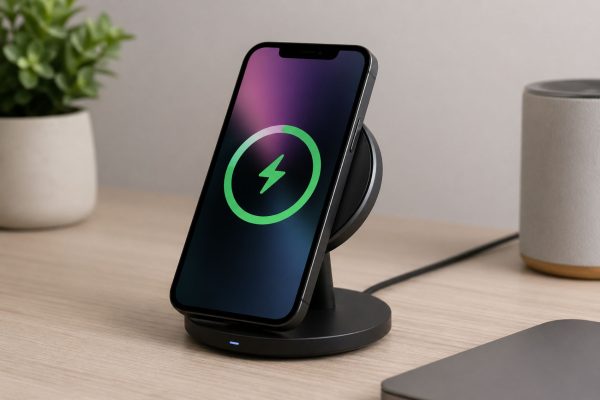
The wireless charging industry is entering a transformative phase, more so, with the introduction and rapid adoption of the Qi2 wireless charging standard, developed by the Wireless Power Consortium. Building upon earlier Qi standards, its advanced version, Qi2 introduces magnetic format of alignment, improved efficiency, and enhanced interoperability, positioning it as a key enabler for the next generation of wireless power ecosystems.
In 2026, Qi2 is no longer an emerging concept. It is becoming a mainstream charging solution across mobile devices, such as smartphones, wearables, and mobile accessories. With major smartphone OEMs aligning their product roadmaps with Qi2 specifications, the standard is expected to accelerate ecosystem growth, reduce energy losses, and improve user experience. This shift is also creating new opportunities across component suppliers, semiconductor players, and accessory manufacturers.
Wireless Charging Market Characteristics in 2026 (Key Trends & Insights)
The wireless charging market is characterized by rapid innovation, strong ecosystem dependency, and evolving consumer expectations. The transition from Qi to much advanced Qi2 solution highlights the industry’s focus on efficiency, convenience, interoperability and standardization.
Key characteristics include:
- Standard-Driven Growth: The adoption of Qi2 is streamlining compatibility across devices, reducing fragmentation that previously limited user experience.
- Ecosystem Expansion: Wireless charging is no longer limited to smartphones. It now spans wireless earbuds (TWS), smartwatches, tablets, AR/VR devices, charging device in automotives, and IoT products.
- User-Centric Design: Consumers increasingly demand seamless, wireless experiences, pushing OEMs to integrate wireless charging into everyday environments.
- Efficiency Improvements: Qi2’s magnetic alignment significantly reduces power loss and heat generation, addressing one of the biggest criticisms of earlier wireless charging technologies.
- Technology integration: Advanced wireless power facilitates integration with other technologies enabled in device such as connectivity, data, communication, location, and others
- Sealed device: As charging ports are the last possible wired connection attached to the device, wireless charging technology facilitates your device to be port-less cutting the last cords. Sealed devices have its own advantages in terms of making devices free from dust, water, grease and other residues.
Overall, the market is shifting from a feature-based adoption to ecosystem-driven necessity, where wireless charging becomes a default expectation rather than a premium feature. A mainstream status.
Supply Chain Analysis of Wireless Charging Market
The Qi2 ecosystem involves a complex and highly integrated supply chain, comprising multiple stakeholders working in coordination to deliver end-to-end solutions.
1. Component Suppliers
- Providers of coils, antennas,, magnets, ferrites, batteries, shielding materials, and power management ICs
- Increased demand for precision magnetic alignment components under Qi2
2. Semiconductor Companies
- Development of high-efficiency wireless charging chipsets
- Integration with advanced materials such as GaN for improved performance
3. Device OEMs
- Smartphone, wearable and other mobile device manufacturers integrating Qi2 into flagship and mid-range devices
- Focus on design optimization and thermal management
4. Accessory Ecosystem
- Rapid growth in Qi2-compatible chargers, power banks, and docking stations
- Manufacturers of lighting, furniture, and other such accessory products integrating Qi2 and other wireless power solution into their devices for added advantages.
- Expansion of third-party accessory manufacturers
5. Infrastructure & Integration Players
- Companies embedding wireless charging into furniture, automotive interiors, and public infrastructure
Qi2 is driving greater standardization across the supply chain, enabling faster product development cycles and reducing compatibility issues.
Global Wireless Charging Market Trends and Strategies
Several key trends are shaping the global wireless charging market in 2026:
1. Magnetic Power Profile Adoption: Qi2 introduces the Magnetic Power Profile, inspired by magnetic alignment systems, ensuring optimal coil positioning. This improves efficiency and enhances charging reliability.
2. Convergence of Ecosystems: Major technology players are aligning around Qi2, leading to a more unified global ecosystem. This reduces fragmentation and encourages cross-brand compatibility.
3. Expansion Beyond Consumer Electronics: Wireless charging is expanding into
- Automotive applications (in-car wireless charging pads – consumer and industrial vehicles)
- Industrial automation (AGVs, AMRs, robotics, power tools)
- Healthcare devices (sterile, cable-free environments)
- Leisure and Sports devices (golf-carts, gym devices, etc.)
4. Focus on Energy Efficiency and Sustainability: Qi2 addresses energy losses, contributing to lower power consumption and reduced environmental impact, aligning with global sustainability goals.
5. Strategic Partnerships and Alliances: Industry players are forming partnerships to:
- Accelerate Qi2 adoption
- Develop interoperable solutions
- Expand market reach
6. Integration with Smart Environments: Wireless charging is increasingly embedded into smart homes, offices, and public spaces, enabling continuous and passive charging experiences.
Future Outlook
The wireless charging market is expected to grow at a five year CAGR of 38% in the net five years from 2026 to 2031. WAWT expects more than 4 billion devices to be shipped in the next five years with advanced wireless power solutions.
Looking ahead, “Qi2 is expected to serve as a foundation for next-generation wireless power innovations”. Key developments to watch include:
- Higher Power Levels: Expansion beyond current limits to support laptops and larger devices
- Spatial Freedom Charging: Moving beyond fixed alignment to true over-the-air charging
- Automotive Integration: Deeper adoption in electric vehicles and autonomous mobility
- AI-Driven Power Management: Intelligent charging systems optimizing energy usage in real time
As the technology matures, Qi2 will likely evolve into a universal wireless power platform, enabling a fully connected, cable-free ecosystem.
WAWT’s Wireless Power Intelligence Service
WAWT’s Wireless Power Intelligence Service is the most comprehensive research on the wireless power market covering market data, forecasts, and insights across 30+ applications in the wireless charging ecosystem. The Wireless Power Market Tracker Report 2026 includes detailed analysis of market size, adoption trends, technology segmentation, power classes analysis and revenue forecasts. It combines an extensive Excel database with in-depth PDF insights, enabling businesses to make strategic, data-driven decisions. The service is widely used by OEMs, semiconductor firms, investors, and technology providers across the value chain.
Summary
Qi2 wireless charging represents a significant leap forward in the evolution of wireless power technology. By addressing key limitations such as inefficiency and misalignment, Qi2 is enabling a more reliable, efficient, and scalable charging ecosystem.
In 2026, the market is witnessing strong adoption momentum, driven by ecosystem alignment, technological advancements, and increasing consumer demand. As wireless charging becomes more integrated into everyday life, Qi2 is set to play a central role in shaping the future of wireless charging. Beyond smartphone which primarily acts as a wireless power receiver (WPT Rx), more and more new devices and accessories are expected to adopt wireless power technology, more so as wireless power transmitter (WPT Tx) to charge these smartphones and other mobile devices.
About WAWT
Wired and Wireless Technology (WAWT) is the leading and most trustworthy strategic technology analyst and consulting firm focusing on the wireless power and power supply industry. No one covers these market segments as WAWT does, with our subject matter experts attending around 15 key industry events and trade shows across the year and across regions, to capture the latest trends, news, and announcements and deliver high-value market insights and intelligence to our esteemed customers and industry associates.
WAWT’s Wireless Power Intelligence Service is the most comprehensive research offering on the wireless power market, covering all types of wireless power technology solutions and their adoption across more than 30 key application markets, irrespective of power levels. The service provides critical market data, trends, insights, and competitive intelligence, helping businesses make informed decisions and stay competitive in this fast-evolving industry.
Feel free to reach out to our subject matter experts (SMEs) at analyst@wawt.tech and follow our LinkedIn page (WAWT) for the latest market trends, insights, and updates on wireless power, wireless charging, and allied technologies.
Qi2 Wireless Charging FAQs (2026 Guide)
-
What is Qi2 wireless charging?
Qi2 is a next-generation wireless charging standard developed by the Wireless Power Consortium. It uses magnetic alignment (Magnetic Power Profile) to improve charging efficiency, device compatibility, and user experience compared to earlier Qi standards.
-
How is Qi2 different from Qi wireless charging?
Qi2 improves upon traditional Qi charging by introducing magnetic alignment, which ensures optimal coil positioning. This reduces power loss, minimizes heat generation, and enhances charging speed and reliability across compatible devices.
-
What devices support Qi2 wireless charging?
Qi2 is designed for a wide range of devices including smartphones, wireless earbuds (TWS), smartwatches, tablets, and mobile accessories. Adoption is expanding rapidly as major OEMs integrate Qi2 into both flagship and mid-range devices.
-
Is Qi2 more efficient than previous wireless charging standards?
Yes, Qi2 is significantly more efficient due to its magnetic alignment feature. It reduces energy loss during charging and improves power transfer, resulting in faster charging and lower heat generation compared to earlier Qi standards.
-
What is the Magnetic Power Profile in Qi2?
The Magnetic Power Profile is a core feature of Qi2 that uses magnets to align the charging coils perfectly between the charger and the device. This ensures consistent and efficient energy transfer while improving the overall charging experience.
-
What is the future of wireless charging with Qi2?
Qi2 is expected to become the global standard for wireless charging. Future developments include higher power levels for laptops, integration into electric vehicles, smart environments, and advancements toward true wireless (over-the-air) charging.
-
What industries are adopting Qi2 wireless charging?
Qi2 adoption is expanding beyond consumer electronics into automotive, industrial automation, healthcare devices, and smart infrastructure. This growth is driven by the need for efficient, cable-free, and standardized power solutions.
-
Why is Qi2 important for the wireless charging ecosystem?
Qi2 reduces fragmentation in the wireless charging market by standardizing compatibility across devices and brands. This enables faster ecosystem growth, improves user convenience, and accelerates innovation across the value chain.
-
What are the key benefits of Qi2 wireless charging?
Improved energy efficiency
Magnetic alignment for reliable charging
Reduced heat generation
Better cross-device compatibility
Enhanced user convenience -
How fast is the wireless charging market growing?
The wireless charging market is expected to grow at a CAGR of approximately double digit from 2026 to 2031, driven by Qi2 adoption, expanding applications, and increasing demand for cable-free power solutions.